deutsch englisch spanisch französisch italienisch
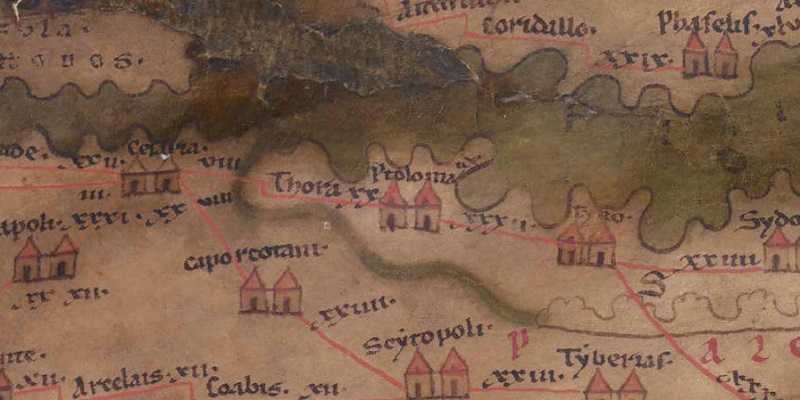
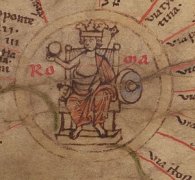
Ausschnitt aus der Tabula Peutingeriana - Rom

Tabula Peutingeriana – Pantalla individual

Topónimo (simplificado):

Ptolomaide

Nombre (moderno):

Akko

Imagen:
Al detalle de la imagen
Topónimo antes XX     Thora     
Topónimo después XXXII     Tyro     
Imagen alternativa ---
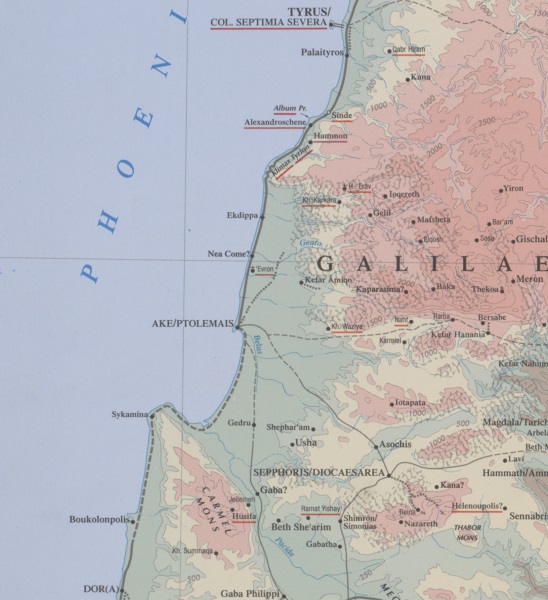
Imagen (Barrington 2000)
Imagen (Scheyb 1753) ---
Imagen (Welser 1598) ---
Imagen (MSI 2025) ---
Pleiades: https://pleiades.stoa.org/places/678010
Área:

Siria/Palestina/Arabia

Tipo de topónimo:

Topónimo con símbolo

Cuadrícula:

9C2

Color del topónimo:

negro

Tipo de viñeta:

A Torre doble

Itinerario:

(149,4 Ptolomaidam)

Nombres alternativos (diccionarios):


Nombre A (RE):

Ptolemais [9] - https://elexikon.ch/RE/XXIII,2_1885

Nombre B (Barrington Atlas):

Ake/Ptolemais (69 B4)

Nombre C (TIR / TIB /otros):


Nombre D (Miller):

Ptoloma||ide

Nombre E (Levi):

Ptolomaide (A,I,1)

Nombre F (Ravenate):


Nombre G (Ptolemaios):


Plinius:


Strabo:


Datación del topónimo en la TP:

---

Fundamento para la datación:


Comentario al topónimo:

[Kommentar (BH):
Scheyb liest "Ptolemaide"]

Kommentar (Talbert):
So that lettering should be kept clear of water, the end of the name is squeezed into the last of the three small peninsulas above it. This end can read be with difficulty as "ide" on the 1976 photograph. All three letters are tiny, and the "d" cannot be distinguished on the 1888 photograph. On the scanned image, an airhole in the plastic cover obstructs close

Miller, Itineraria, Sp. 809-810:
Ptoloma||ide (So Bt, Ve; das Ende des Namens -ide ist wegen Platzmangels abgetrennt und darüber – über dem „a“ beginnend – eingezeichnet: Dj; irrig Petolomaide (Bg) und Ptolemaide (Sch, Ma, Pd, Kt)), Ptolomaida (Ra, Gu, Hi – civitas), Ptolemaidam (It), Πτολεμαΐς (Callim, St, Diod, Steph, Pt, öfters bei Josephus, I Macc., Acta app.), früher Aca, Ἄκη (Scyl, St, Diod, Steph B, Nep, Pl), im Altertum Akko, später wahrscheinlich durch Ptolemaeus Lagi vergrößert, verschönert und nach ihm benannt; übrigens hieß nach Etym. M. h. v. und Harpocr. v. Ἄκη bloß die Zitadelle Aca. Die Stadt war der Stützpunkt aller Unternehmungen der Perser gegen Ägypten (Nep Dat.); später, nachdem Tyrus und Sidon schon gesunken waren, große und blühende Hafenstadt, seit Claudius col. (Pl); in einer großen, rings von Bergen umgebenen Ebene, 120 st nördlich von Karmel (Josephus), an einem Meerbusen gelegen, später zu Galiläa gehörig (Jos, BI 2, 9); j. arab. Akka; zur Zeit der Kreuzzüge und noch j. franz. St. Jean d´Acre.
20. 1 Tagesreise (Acta app 21, 8). It: bis Sycamina 24, von da bis Caesarea 20 (ersteres zu viel, letzteres zu wenig).
Die ganze Entfernung beträgt 39 mp.
Im Hi: bis mut. Calamon 12; j. Haifa, berühmt durch Fischerei von Purpurschnecken;
bis mansio Sicamenos – ibi et mons Carmelus – 3; j. am Ras el Krum, am Fuße des Karmel;
bis mut. Certha 8, zusammen 23; j. in der Gegend des Castellum peregrinorum, Magdiel, j. Atlit (Ruinen); es fehlt Thora 7 oder 8.
inde Caesarea 8 mp.

Datierung (Barrington):
Ake/ - Helenistic/Roman/Late Antique
Ptolemais
(NEAEHL 1, 16-31; TIR Iudaea 204-205)

Bibliografía:

Miller, Itineraria, Sp. 809-810;

Spuler, Bertold, Ptolemais [9], in: RE XXIII.2 (1959), Sp. 1883-1886.

   [Standard-Literatur-Liste im PDF-Format]

Última elaboración:

09.03.2026 17:28


Cite this page:
https://www1.ku.de/ggf/ag/tabula_peutingeriana/trefferanzeige_es.php?id=2917 [zuletzt aufgerufen am 07.04.2026]

Derechos Política de privacidad